Chapter 1
The Kuranda Triangle

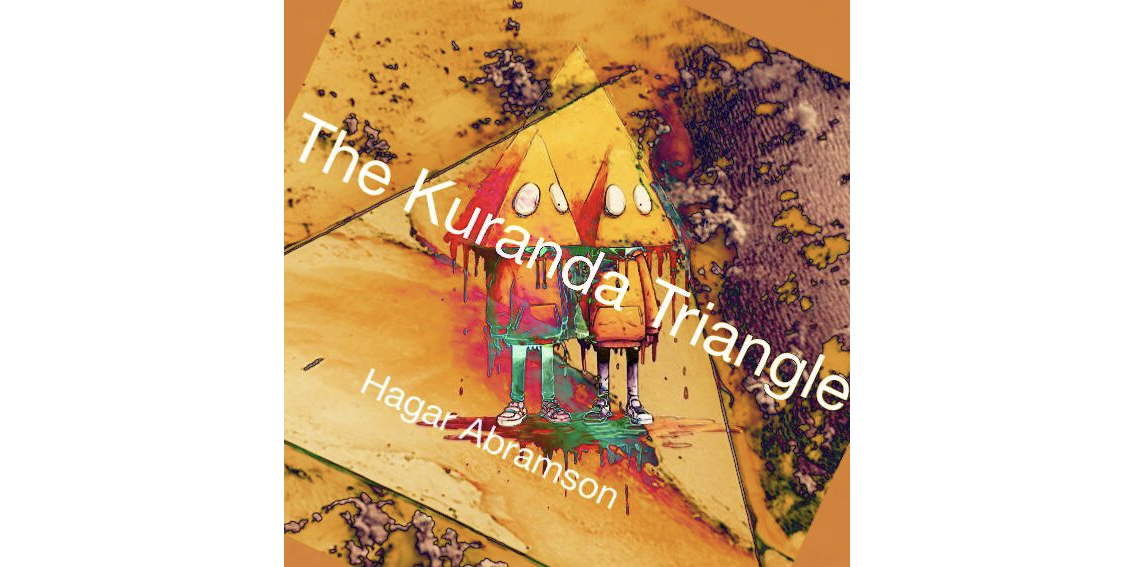
We were at the end of the dry season in the tropics and hot, humid days were on the horizon when, exactly in line with the calculations and planning, they arrived at Cairns airport with 2 identical suitcases, relatively small ones compared to the other passengers’. After all the hugs and short questions, and with the excitement of the meeting subsided, we began the drive to the next part, checking out the holiday apartment they had rented. After collecting the keys at the office, we went upstairs to the apartment, and so began the days of seeing the scenery, visiting different places and eating in restaurants, and coffee along the way. We made a list of different destinations, so for them it was just a matter of choice, and for us it was an opportunity to see places we had never given the time to visit.
The first week passed and the second week, the list was getting short, so the destinations also began to include places we had already visited, and we were looking for a new angle of viewing. “What about Kuranda for tomorrow?” “My husband’s father asked, “We want to go there again,” he added. We sat in an outdoor cafe overlooking the sea, watching a few sailboats return to the marina. Here and there, people strolled on the promenade between the sea and where we were sitting.
It was easy to decide to go to Kuranda the next day as we always found something to do and see there. The place was built for tourists and full of stalls. They were set up and rented by the residents. Old hippies had established it, like other settlements in places where it is relatively cheap to buy a piece of land and build a house. And slowly, as the place became more desirable, the house prices went up. Kuranda’s popularity was at its peak when we arrived in Cairns. After a few years, you could see the shadow of departure creeping in. Here and there, buildings that had the large courtyards with the market stalls began to undergo renovations. In one complex, only half of all the places were rented out, and you could feel the lack of joy in the air, even though the place was relatively full of tourists, and tourists have no point of comparison, so no one was bothered by it.
We were bouncing from stall to stall after visiting the Butterfly Sanctuary when my husband and I decided to sit on a bench that was stuck on the side of the sidewalk, opposite the entrance to one of the parking lots, and let his parents go shopping by themselves. Although they were much older than us, they were much fitter due to a lifestyle that included quite a lot of physical activity of walking here and there for years, also something that we did not make time for, so it was no wonder that they could move around much better than us, between the parking lots and stalls while we sat on the bench and watched the entrance of the place that pretended to be a gallery, and maybe it really could live up to the title of a gallery as they did sell paintings, and maybe with the content that they hung extensively all over the front and in every possible inch they seemed to me not exactly like swindlers, but it wasn’t great art that came to tell the world a message that reflected social criticism.
At first, while we found ourselves on the bench, the conversation between us was about the artist whose butterfly paintings were also hanging in the front. “Do you know who she is?” My husband asked me, “Who “?” I asked him, “The one who painted the pictures with the butterflies on the right side of the entrance.” Five paintings stood in a row, one single butterfly on each square canvas, almost a replica of a box with a butterfly in it. Especially when they are quite large, they get a single box for themselves. “They don’t paint particularly well.” I said, to which he replied, “That doesn’t answer the question.” He said that he especially wanted to tell me who the painter was. “So who is she?” I asked him, opening the door for him to tell me. “She is the curator at the State Gallery in Cairns.” Not only did we already have an opinion about her, which did not reflect any respect due to the banality of what we saw from her work, seeing her butterfly paintings which were also of a very low technical grade, and maybe it wasn’t fair to form an opinion about her through the content of her paintings, but it was like the icing on the cake, so with pleasure I began with analyses of the composition, and of the texture, and of the brushstrokes, and ended with a kind of triumph, saying, ”There is no movement in the painting, there is no music and sounds, the butterfly is dead, it is a painting without life, it is not even the first day of its life, it is totally dead, dead, dead,” emphasising the last word several times with a wide smile on my face because I pinned her to her own canvas.
Yes, I’d had an unsympathetic experience with her and I’d heard enough other artists about similar bad experiences with her and here she stood before me to pour out words in abundance, everything that had accumulated inside me. At this point I could not help but add “Even as a souvenir it fails, because who wants to hang a dead butterfly on the wall, even as a memento of a wonderful walk among the stalls at the Kuranda art market?!” I saw that my husband was sitting quite contentedly next to me and we both felt completely relieved that we hadn’t dragged ourselves into the store... definitely not a gallery.